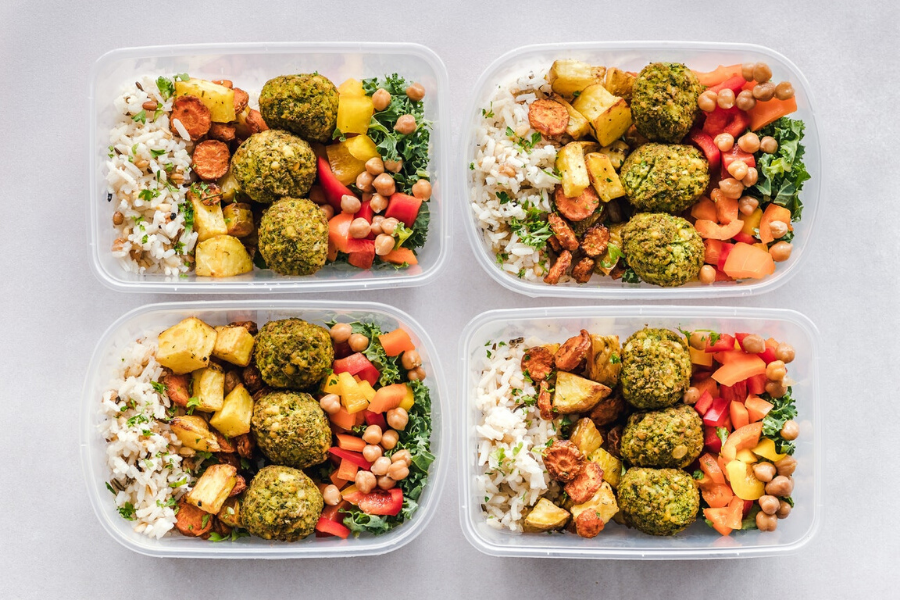
The better solution to avoid eating unhealthy food is to stop bringing it home. Out of sight out of mind. When you have nutritious food in your pantry, you’ll eat healthy. Frugal foods are nutritious and easy on your wallet.
Cooking at home gets easier with meal planning. And, meal planning becomes painless when there’s a list of ingredients to refer to.
These are some core ingredients you need to nourish your family. Frugal meals are a sustainable way to put wholesome food on the table while staying within the budget. It is good for your family and the environment.
What would you like to add to the list? Share with us your frugal food suggestions in the comment section below. Thank you so much for reading. Happy Cooking!
The more processed food the bigger the price – is a simple logic to eating healthy on a budget. It’s a no-brainer that when you choose whole food items you’ll be eating healthy.
One takeaway tip from this article is to buy more raw real food like fruits, veggies, eggs, and grains. And, less ready-to-eat or pre-packaged meals to eat healthily and keep your grocery bill low.
Sounds complicated?
Well, it isn’t!
We all know, that we have to pay big money for comfort/luxurious goods and services which also include food. By buying convenience food, you aren’t paying for the quality of food but for the word “convenience” in the phrase.
Thus, if you keep that convenience/comfort part aside, you can do a whole lot within a few bucks. That too, with minimal work.
How?
Working smarter, not harder is important here. By working smart, you can cut the cooking time in half and optimize your grocery budget. Importantly, you can feed your family fresh, nutritious meals.
Today, we are going to explore some of the ways you can feed your family healthy on a budget:
HOW TO EAT HEALTHY ON A BUDGET
1) Plan meals ahead:
Planning the menu ahead is the simplest way to save time and money, and largely, to keep you sane. I have this elaborate article on Meal Planning to make your job easier.
Consider stocking your pantry with whole food that works as a base for any dish. You need basic items to cook a meal: flour, rice, lentils, beans, potatoes, bananas, apples, eggs, oil/butter, milk, sugar, salt, and pepper. For more details, check out my list of 74 frugal foods to build your pantry on a budget.
Foodstuffs such as rice, beans, or potatoes make the meal more filling. Apple, bananas, and milk make a complete breakfast too. Omelets, and banana smoothies, for instance.
Thus, you’re eating healthier and better at a lower price.
4) Pack work lunches:
According to the article by makingsenseofcents.com bringing lunch to work can save a huge amount of money per year. Check out the article for some great tips.
5) Drink coffee at home:
Buying a good coffee maker is a one-time investment that can save big bucks at the end of each month. You will be saving well even after buying a high-quality coffee and creamer compared to cafe rates.
6) Make your own spice mixes at home:
Did you note how much the ground spices from the store cost? Almost the amount of 2 lbs of rice. Do make it at home and your dishes are going to taste – So. Much. Flavourful. It simply takes me a half-hour to toast and grind my own spices at home.
7) Make your own sauces and salsas:
Pre-prepared sauces are again something heavy on your grocery budget. I make them myself right before cooking.
Sauces made using fresh ingredients are nutritious and taste better. They’re free of preservatives, added flavors, and colors. Plus, they cost so much less.
8) Homemade curd:
Try to make curd at home, if you use curd or buttermilk often. The traditional method is great for achieving thick, rich, and creamy consistency along with saving a decent amount of money. Let me know if you want tips on how to make curd at home.
9) Go Meatless:
Vegetarian food is always better for you.
Find out some yummy vegetarian alternatives to your favorite food.
10) Make snacks at home:
Fruits, apple slices with peanut butter, roasted peanuts/chickpeas, boiled corn, fried corn, cheese sandwiches, boiled eggs, potato wedges, potatoes/sweet potato fries – the options are endless. Just think or google or search YouTube for creative ideas to maximize what you already have.
Final Words:
So, there you go! It is easier to eat healthy on a budget than we think. We need to know that some efforts on our part are necessary to feed our family – with healthy meals and to administer our hard-earned money.
Over to you. I would love to have your tips and tricks to feed the family on a budget. Let me know in the comments below. Thank you so much for reading.
Well, before you even start to wonder if meal planning is for you, let me tell you there’s something for everyone.
Does the “What’s for dinner” question stress you out every single day?
Do you run out of ingredients while cooking your favorite meal? Whereupon, do you need to rush to the grocery store to buy an ingredient or two?
Do you grab a take-out because you don’t want to deal with the lengthy cooking procedures?
Here’s a quick solution: Meal Planning
Meal Planning might sound like extra work but it’s going to make your life easier.
I’m sure, you’ve heard about many different meal-planning techniques. That’s because meal planning is no one size fits all approach. What works for you might not meet someone else’s requirements.
I cannot stress enough the fact that a little planning and prep up goes a long way in accomplishing things. Meal planning is no different.
Cooking is an inevitable part. Hence it’s always better to simplify things for yourself if you really want to eat at home, most days a week. When you have a menu plan, you’re motivated to purchase the ingredients required for the selected recipes. With little prep, you’re likely to cook at home.
I used to grocery shop recklessly. And buy a lot of packaged food along with healthy stockpiles.
Due to a lack of planning, I couldn’t decide what to cook until dinner hour and order food from the restaurant at the end.
What is Meal Planning?
A meal plan is a list of weeks worth of meals.
It usually includes breakfast and dinner recipes, that you pre-plan to make in the forthcoming week. The chart works like a roadmap.
On a weekend/weekday, you sit down for 10-15 minutes to plan meals and make a grocery list. And follow that plan, throughout the week without having to spend your time and energy deciding what to cook for dinner, every single day.
This will ensure harmonious daily routines.
Sometimes we may think having a well-stocked pantry will allow us to skip meal planning. It doesn’t work for me. It still takes up energy to determine what to cook. It’s like “a wardrobe full of clothes but nothing to wear” thing for me. This technique might work if you plan and prep up at least the night before.
Before we start with our three-step meal planning method, if you’re a beginner, you have an additional step to do. Which I suggest you do in your leisurely time and not while planning your meals.
1. Jot down all the meals that your family enjoys. (you can include breakfast recipes along with main meals)
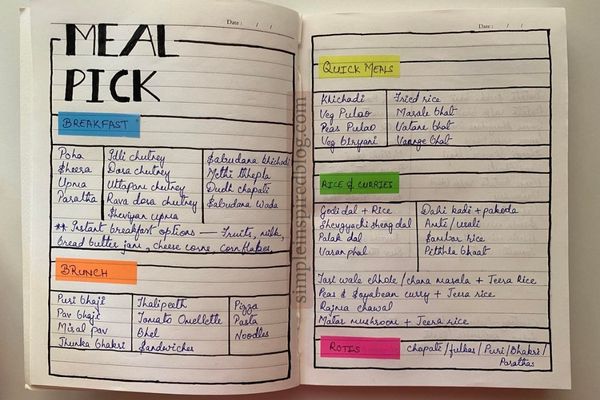
My crafted menu choice chart. Simple and functional.
2. From these, pick the meals that everyone likes in common, in your family.
3. Now, sort some quick and easy one-pot meal recipes out of the list. They can be your go-to recipes when you’re short on time. One-pot meals can come in handy when you’ve had a long day, not feeling well, or having a lazy day.
4. This list of recipes is your dinner and breakfast options which you‘ll need at the time of weekly meal planning for reference. You can get it printed or write it in a planner.
Meal Planning in Three Easy Steps:
1. Menu plan:
Note down the meals for the week.
This is the time to decide:
how many meals do you want to cook in a week?
Plan leftover days, full meals, quick meals, crockpot meals, and eat-outs.
For example: if you want to cook 6 days a week. Aim for 3 full meals, 2 quick meals, 1 leftover day, and a day off for eat-out. For busier days, slow-cooker recipes could be very helpful.
This kind of balance will help keep things interesting.
If you have a bigger family try to incorporate everyone’s favorite meal into the week. Ask your family to suggest what they would like to have for the week?
Take into account, beans, veggies, sprouts, grains, leafy veggies, fish, chicken, eggs, and meats to add variety for a healthy balanced diet.
You can plan your breakfast as well to start your day on a healthy note.
2. Grocery list and shopping:
Make a list of the ingredients you need for the whole week’s meal plan.
I recommend using the Note App to quickly write down the menu plan and grocery list.
Using an app helps avoid dealing with papers, planners, sticky notes, markers, etc., It makes editing easier and saves time from rewriting the lists. Plus, you can head out shopping conveniently with your phone.
Group ingredients together like dairy stuff, veggies, spices, meats, etc., to waste no time at the grocery store.
To save money, I urge you to take an inventory before leaving for grocery shopping. Remove the items that you already have. Make it a point to stick to the list.
If you’re someone who likes to ‘shop on sale’ meaning shop things that are on sale in that particular week. Then, you will have to grocery shop first and make a meal plan around the items you have purchased.
3. Meal prep:
Prepping up your meals is helping your future self. You’ll be relieved and thankful you did.
It’s like getting a chunk of work done earlier. Which is gonna make cooking a breeze!
Being realistic with prepping up is important though.
Cutting the veggies a week before and storing them in a plastic container is unhealthy.
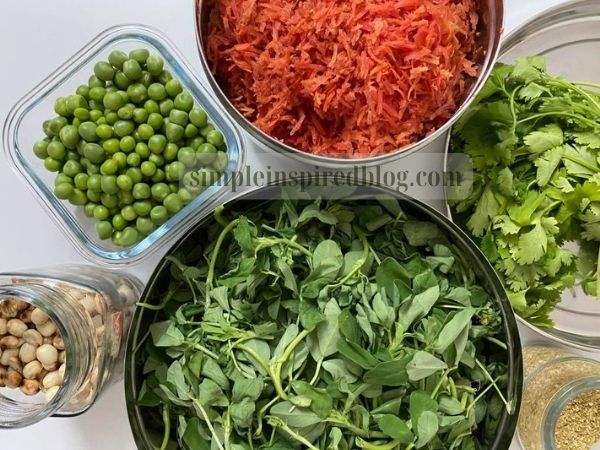
I suggest doing the chopping, kneading, and marinating work the night before. Things like organizing the pantry and refrigerator for easy access, washing and storing fruits and veggies, dry roasting, peeling green peas, garlic, carrots, and bunching ingredients together can be done a week before.
Final Words:
Planning meals in advance make grocery shopping and cooking at home easier. It is healthy and stress-relieving. Meal planning saves a lot of time, energy, and money.
Try to keep the meals simple and healthy. If you want to try out a new recipe, schedule it for a relaxing day. Always make sure to check your pantry and list the only items that you need to prevent wastage.
Over to you. I would love to learn more meal-planning tips from you. Please leave your tips and tricks in the comment section below. Thank you so much for reading. Happy Meal Planning!