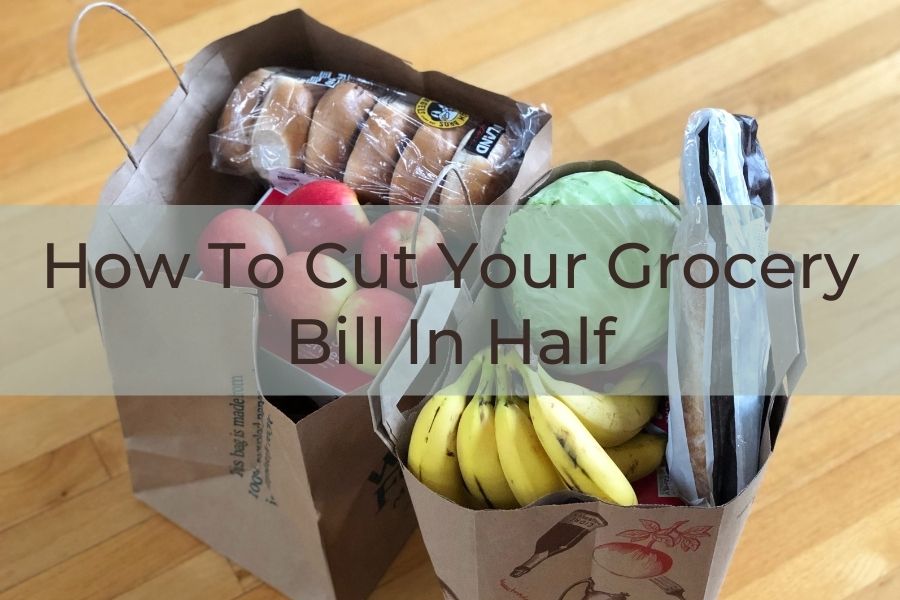
Groceries are the third major expense of your monthly budget. Not surprisingly, with the ever-increasing cost of living, you would want to figure out ways to cut your grocery bill in half.
Truly, food and household expenses can be huge. I feel everyone should consider lowering them, especially if you’re looking to live more frugally, trying to accommodate a single income, saving for retirement, or with any other financial goal.
Groceries are a flexible expense and can be slashed significantly by planning and shopping smart.
This is also the best time to review your food expenses because the pandemic has been such an eye-opener. We now know how much less we actually need to survive. How cooking from scratch can help us stretch meals, be creative, and feed our family the best out of whatever little we have.
18 SMART WAYS TO CUT YOUR GROCERY BILL IN HALF
Learn to cook from scratch:
Without this, the steps below won’t make any sense.
Because if you don’t know how to cook even your basic meals, the only way out would be buying microwave meals, processed food, or takeout, which will barely save you money.
Read 6 Reasons You Should Start Cooking From Scratch Today
Buy loose ingredients:
How often do you find a partially used sack of rice or flour at the back of your cabinet, that you might have bought at a sale, only to find it has been attacked by grain pests?
Grains, legumes, pulses, and sugar are better purchased from loose sections of your grocery store to tailor the package size to your needs.
This will guarantee everything is purchased in appropriate quantities and no excess is wasted.
Stockpile:
Building a pantry is essential if you’re serious about saving money and want to stop wasting time making frequent trips to the grocery store.
A further reason to have a well-stocked pantry is that you’ll have sufficient food available to get through any good or bad situations, like surprise guests, overdue paychecks, unanticipated cyclones, or topical events such as the pandemic.
I have a complete list of must-have pantry staples everyone needs to have on hand. Check out my list of 74 Frugal Foods To Build Your Pantry On A Budget.
Buy in bulk — but other goods, not food:
Our grocery bill includes other household supplies besides food items. This lists – homecare needs, personal care products, pet supplies, and similar items.
Rather than buying food products in bulk, a volume purchase of non-perishables would be of more value. They have a longer shelf-life and are easier to store.
For food items, buying only the quantity that will actually be used is advisable. Also used up before the use-by date.
Create a list and stick to it:
The first step before buying groceries is to plan your meals and create a list of ingredients you need to cook those meals to avoid making last-minute trips to the grocery store.
Shopping with a list is a proven technique to restrain impulse buying.
Check out my article How To Meal Plan In 3 Easy Steps to plan your meals and make a shopping list the easiest way.
Take an inventory before creating a list:
Have a look at your freezer, fridge, and pantry to see what you need and avoid unnecessary purchases.
Avoid purchasing frozen meals:
Instead of buying frozen meals, how about cooking a bunch of items, 2-3 days per week, and freezing the leftovers for the rest of the days?
Soups, stews, sandwiches, burritos, enchiladas, and slow cooker recipes are great choices for freezer meals.
Avoid precut veggies & fruits:
I cannot endure precut fruits and vegetables for the unsanitary feel, and the pricing.
I’d better wash them and cut them myself and save some extra bucks.
Make use of leftovers:
Leftover food, done right, can be great meals.
You can create a whole meal out of leftover rice, curried, fried, baked, or even steamed vegetables.
Cut down on food waste:
New to cooking? — Cook smaller quantities.
Trying a new recipe and not sure? — Attempt only 1 to 2 servings.
Got big-size broccoli? — Chop and put into a Ziploc bag to portion it out.
Store the shopped food properly:
This is the crucial step of all. The food, especially the produce, you’ve brought for your week’s meals, should last you through the week.
Learning and ensuring everything is stored in their storage conditions will make it worth every penny and effort.
Use surplus groceries at the end of the month:
Use up the scraps of veggies, noodles, and bread (croutons) to make stews, soups, or casseroles topped with cheese; consume everything that you have bought with your hard-earned money.
Take note of servings per day:
Be considerate of the serving size – you’ve bought something in bulk, it doesn’t mean it should be consumed in bulk 😀 remember those are your MONTHLY groceries.
Watch out for your shopping hours:
Be careful of the time you pick to shop. Avoid shopping during peak hours. Generally, dinner time/after-office hours are when the stores are super-crowded. I prefer the time between 2-4 p.m. for being the no-rush hours.
Since there’s no crowd, you can take your time to compare the prices, find good deals, read labels, and check out the generic (non-specific) alternatives.
Buy in-store brands:
The stores’ in-house brands usually offer lower prices compared to big-name brands. I use them and cannot distinguish the quality between the two.
Find a good local store:
Compare prices at your local grocery stores. Look for stores or supermarkets that would provide lower prices/sales. And one that is located near your home.
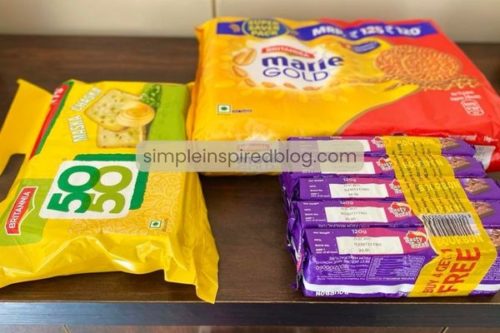
Shop once a month:
If possible, plan the grocery store trip once a month. Then, a quick produce purchase once a fortnight.
Other times, just stay out of the stores.
Often, you go to the store for small things and come home with so much more.
If daily fresh items like bread, milk, etc, make you stop at the grocery store, have them delivered to your place.
Ask for deals:
When you find a good grocery store in your area, ask for deals as a regular buyer.
Inquire if they have coupons, discounts, or free products; they should, particularly when you’re paying a large sum every month.
And, if they don’t, it’s time to look for a good grocery store.
Final words:
Remember, food is nothing but your money. Wasting a lot of food means putting your hard-earned money down the drain.
Next time on your grocery trip, don’t forget to try these smart tips. I’m sure they’ll help you cut your grocery bill in half.
Let me know your thoughts in the comments section below. Thank you so much for reading. Happy Shopping!